Smart glasses rely on complex global supply chains dominated by Japanese firms, but China’s rapidly advancing display, optical, and component technologies are reshaping the AR industry landscape.
Smart glasses are widely regarded as the next-generation human–computer interaction interface and are attracting increasing attention from the global technology industry. From augmented reality overlays to real-time information prompts, and from medical assistance to industrial applications, their potential use cases continue to expand.
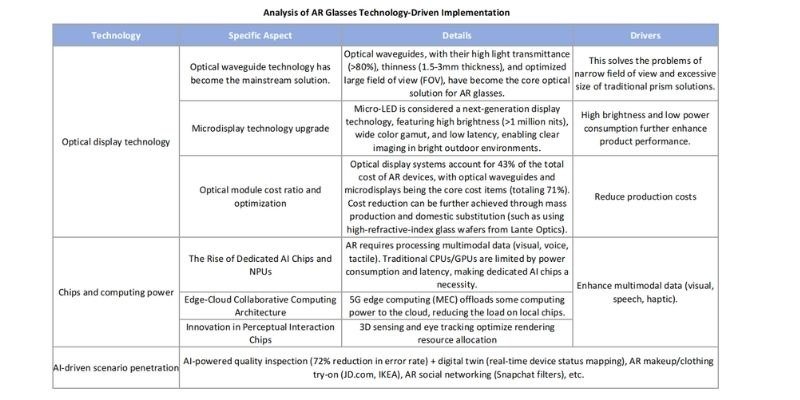
Core Application Markets for AR Glasses
The global AR market is still dominated by the enterprise sector, with enterprise applications accounting for approximately 80%, while consumer applications represent around 20%.
The core application scenarios for AR glasses include industrial manufacturing, healthcare, education and training, and consumer entertainment. Below is a closer look at how AR glasses are being adopted across these sectors.
The Global Smart Glasses Supply Chain: Japanese Companies Still Dominate Key Components
Behind this cutting-edge product lies a complex and highly specialized global supply chain. Notably, Japanese companies play a critical role in several key segments of this ecosystem.
This deep reliance on Japanese suppliers provides strong technological support, but in the context of today’s rapidly changing global landscape, it also presents potential supply chain risks.
Today, we will review some of the major Japanese companies across the smart glasses supply chain to provide insights and references for the industry.
The Technical Core of the Visual System
Display and Optical Solutions
To seamlessly integrate digital information with the real world, the display and optical systems of smart glasses represent the highest technical barrier.
In this field, several companies have established strong advantages through years of technological accumulation.
Microdisplay Technology
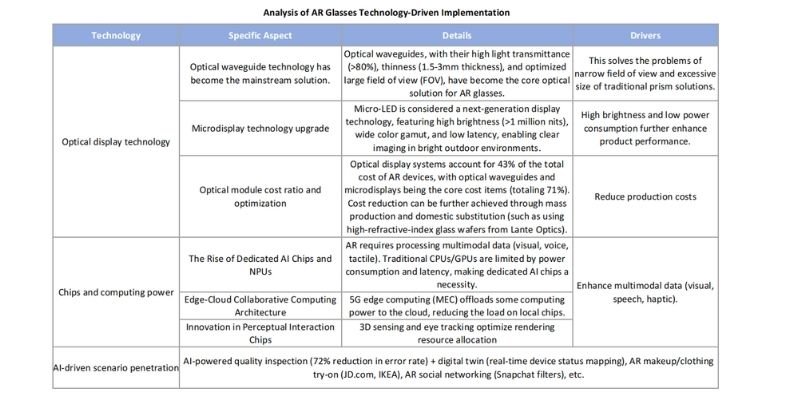
In the microdisplay segment, Micro-OLED (silicon-based OLED) is currently considered the most suitable display technology for high-end smart glasses.
This technology can achieve:
- High resolution in extremely small form factors
- High contrast ratios
- Low power consumption
These characteristics meet the strict requirements of wearable devices.
In this area, Sony has long been the industry leader. Its Micro-OLED displays are widely used in smart glasses due to their outstanding performance specifications.
Among leading AR brands—including Rokid, RayNeo, XREAL, and others—Sony’s Micro-OLED panels are widely adopted.
From the perspective of the microdisplay supply chain, Sony is clearly the dominant player. As early as 2022, Sony accounted for more than 60% of global shipments, and in the VR/AR segment its share reached approximately 80%.
Mainstream Optical Solutions
Optical systems are equally critical.
Currently, optical waveguide technology has become the mainstream approach. It allows AR glasses to achieve larger fields of view while maintaining thin lens structures.
Japanese AR display company Cellid has made significant breakthroughs in waveguide technology and is gradually emerging as a key player in the industry.
In November last year, Cellid unveiled a prototype AR glasses model demonstrating its latest optical waveguide design concepts.
Previously, the company had also launched several display modules, including:
- Cellid Waveguide 60, which uses an ultra-small MicroLED projector
- An optical module capable of achieving a 60-degree field of view
Cellid has also made solid progress in financing, providing continued support for its core technology development.
Optical Materials and Lens Technologies
In the lens material segment, Mitsui Chemicals has introduced resin lenses designed for AR waveguide applications. These materials can support multiple AR device module sizes.
Meanwhile:
- HOYA has deep expertise in diffractive waveguide technology, with optical components used by multiple smart glasses manufacturers.
- Ricoh focuses on surface-relief waveguide technology, offering diversified solutions for different product requirements.
In addition, Canon and Panasonic, leveraging their extensive experience in traditional optics, are investing in freeform prism optical solutions, expanding the design possibilities for smart glasses.
Key Components of the Perception System
Sensors
To perceive the surrounding environment and user behavior, smart glasses rely on a variety of high-precision sensors. Japanese companies also play important roles in this segment.
Image Sensors
Sony’s CMOS image sensors dominate the global market and are widely used in smart glasses camera modules.
These sensors support more than traditional photo and video functions. They are also essential for:
- Gesture recognition
- Spatial positioning
- Environmental understanding
All of which are core capabilities for augmented reality systems.
Inertial Measurement Units (IMU)
Another critical component is the inertial measurement unit (IMU).
As AI and edge computing continue to evolve, IMU technology is also advancing rapidly. Globally, companies such as:
- TDK
- STMicroelectronics
- Murata Manufacturing
have launched high-performance IMU solutions.
Murata and TDK produce IMU modules integrating gyroscopes and accelerometers, enabling precise tracking of subtle head movements. This is essential for maintaining stable virtual content and preventing motion sickness.
Passive Electronic Components
At the basic electronic component level, companies such as:
- Murata Manufacturing
- TDK
- Taiyo Yuden
produce essential components, including:
- Multilayer ceramic capacitors (MLCCs)
- Inductors
- Filters
Although these components may appear small, they are critical for ensuring the reliability and stability of smart glasses systems.
Supporting Systems
From Batteries to Structural Components
Beyond display and sensing systems, battery life, acoustic performance, and structural design also significantly affect the overall user experience.
Battery Technology
Battery technology remains one of the key constraints in smart glasses development.
Panasonic, a major global lithium battery supplier, provides high-energy-density pouch batteries with strong safety standards.
As early as 2016, Panasonic developed miniature lithium-ion batteries specifically for smart glasses, designed to be integrated into components such as the temple arms.
Achieving longer battery life within limited internal space requires balancing energy density and safety, an area where Panasonic has strong expertise.
Acoustic Systems
In acoustic systems, while final assembly may be handled by other manufacturers, Japanese companies such as Foster Electric maintain technological advantages in miniature speaker development.
Breaking Heavy Dependence: The Rise of China’s Supply Chain
China’s rapidly evolving supply chain is beginning to reshape the existing industry landscape.
Although foreign companies still dominate several critical segments of the smart glasses supply chain, Chinese suppliers are rising quickly, creating a competitive and complementary industrial ecosystem.
Display Technologies
In the core display sector:
- BOE has accumulated years of experience in OLED microdisplay technology. Its silicon-based OLED displays have entered mass production and are already used in multiple AR/VR devices.
- SeeYA Technology is also emerging as a strong competitor in the silicon-based OLED market, continuously improving key performance metrics such as brightness and power efficiency.
Meanwhile, Shanghai JBD (Jade Bird Display) has established an important position in MicroLED microdisplay technology, addressing key bottlenecks in AR glasses mass production. JBD has become a key supplier for domestic AR glasses brands.
Optical Modules
LynxOptics (Lingxi Micro-Optics) has made breakthroughs in array waveguide technology, achieving mass production and deployment in multiple AR glasses products.
HiScene (Huiniu Technology) has also become a leading AR/VR optical solution provider in China. With innovations in Coaxial Airguide (CA) and Pancake optical technologies, the company offers new technical paths for the industry.
Currently, Huiniu is the exclusive optical solution supplier for Huawei AR glasses, and has deep collaborations with companies such as iQIYI and DPVR.
Changing the Industry Landscape
The rapid development of these Chinese companies is gradually transforming the original market structure.
From a supply chain security perspective, diversification benefits device manufacturers.
On one hand:
- Foreign suppliers continue to provide critical technological innovation.
On the other hand:
- China’s fast-growing supply chain offers more sourcing options and reduces dependency risks.
China’s supply chain also has several structural advantages:
- A comprehensive electronics manufacturing ecosystem
- Strong large-scale production capabilities
- Fast market response speed
With increasing R&D investment, the technological gap between Chinese companies and global leaders is gradually narrowing.
Long-Term Outlook
Looking ahead, the development of the smart glasses supply chain will increasingly emphasize collaboration across the ecosystem.
Foreign companies maintain strengths in:
- Core materials
- Fundamental components
Meanwhile, Chinese companies excel in:
- Large-scale manufacturing
- System integration
This complementary relationship can help drive technological progress and cost optimization across the entire industry.
Conclusion: The Future of Smart Glasses and Display Supply Chains
As the smart glasses market continues to expand, the global supply chain supporting AR devices is entering a period of rapid transformation. While international companies—particularly Japanese suppliers—still maintain leadership in key technologies such as Micro-OLED displays, optical waveguides, and advanced sensors, the rapid development of China’s display ecosystem is gradually reshaping the competitive landscape.
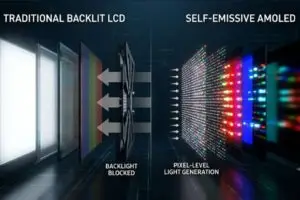
A diversified and resilient display supply chain will be essential for the sustainable growth of the AR/VR and smart glasses industry. Among emerging display technologies, Micro-OLED (silicon-based OLED) has become one of the most important solutions for near-eye displays. In essence, Micro-OLED can be viewed as an extension of AMOLED display technology built on a silicon substrate, enabling extremely high pixel density, compact form factors, and low power consumption. These characteristics make it particularly suitable for AR glasses, VR headsets, and other immersive wearable devices.
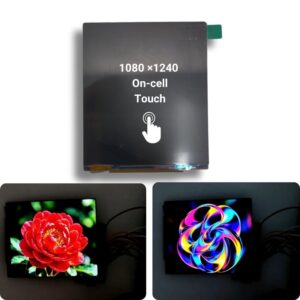
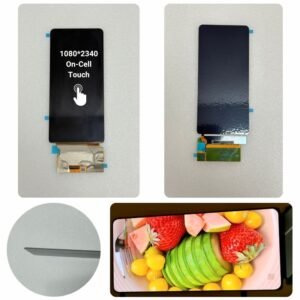
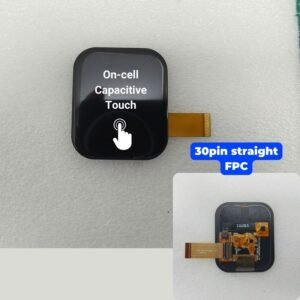
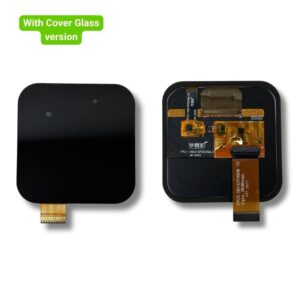
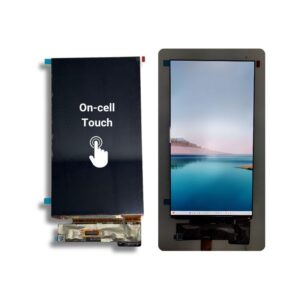
However, while Micro-OLED is primarily designed for near-eye AR/VR applications, AMOLED display technology remains the dominant solution for many high-end consumer electronics. Devices such as smartphones, smartwatches, portable electronics, and embedded display systems continue to rely heavily on high-quality AMOLED display modules due to their advantages in contrast ratio, power efficiency, thin form factors, and flexible design capabilities.
-300x300.jpg)