On November 27, 2025, TrendForce released its Top 10 Technology Market Trend Forecasts for 2026, one of which predicts that OLED displays are approaching a cross-generational turning point.
TrendForce stated that as Chinese and Korean panel makers continue expanding high-generation (8.6G) AMOLED production lines, and as cost structures and yields steadily improve, OLED display technology is rapidly expanding from small-sized products to full-size applications. This transition is simultaneously driving higher average selling prices (ASP) and stronger bargaining power across the supply chain, including display driver ICs, TCONs, touch modules, and advanced thermal design components.
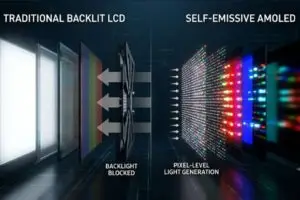
With characteristics such as self-emissive pixels, high contrast ratios, ultra-thin designs, and variable refresh rates, OLED technology breaks through the physical limitations of LCD in terms of thickness and power consumption, aligning closely with Apple’s dual requirements for image accuracy and energy efficiency.
First, Apple Is Expected to Introduce OLED into the MacBook Pro in 2026
Apple is expected to officially introduce OLED panels into MacBook Pro models in 2026, driving high-end notebook display specifications to shift from mini-LED to OLED. OLED notebook penetration is projected to reach 5% in 2025, and after 2026—under Apple’s influence—it is expected to rise to 9–12% during 2027–2028.
Second, Apple May Enter the Foldable Smartphone Market Between Late 2026 and 2027
Apple may officially enter the foldable smartphone market between the second half of 2026 and 2027. Leveraging its strengths in software–hardware integration, brand trust, and supply-chain coordination, Apple is expected to redefine the value proposition of foldable phones, shifting market focus from “visual novelty” to “enhanced productivity and user experience.” This move is projected to push global foldable smartphone shipments beyond 30 million units by 2027.
Therefore, in 2026, the AMOLED Generation 8.6 became one of the main battlefields in the display industry.
A Brief Analysis of the Two Major 8.6G OLED Camps
According to the report, the global IT OLED panel market is now engaged in intense competition centered around 8.6-generation production lines, with two major technological camps emerging: traditional FMM (Fine Metal Mask) and FMM-free (maskless) approaches.

FMM refers to the OLED manufacturing process in which red, green, and blue emissive materials are precisely evaporated onto pixel locations. The fine metal mask functions like a template with microscopic openings to ensure accurate material placement. This technology is mature but relatively high in cost.
Industry leaders are now competing fiercely around 8.6-generation lines, which offer higher production efficiency, forming two distinct technological paths. Samsung Display (SDC) and BOE remain committed to the traditional FMM route, while Visionox and TCL CSOT are pursuing alternative FMM-free solutions.
Within the FMM camp, Samsung Display took the lead in 2023 by initiating investment in an 8.6-generation OLED line. This line adopts a mature FMM evaporation process and incorporates Tandem OLED technology, which extends panel lifespan. Samsung has already secured Apple as a customer and is expected to supply OLED panels for MacBook Pro models launching in 2026, with mass production potentially beginning as early as Q2 2026.
Following closely, BOE announced in late 2023 its investment in an 8.6-generation OLED line, also based on FMM and Tandem OLED technology. The line is expected to be lit up in the first half of 2026. Leveraging its experience supplying brand customers via Gen-6 lines, BOE has already secured a solid customer base for the new production line.
Visionox and TCL CSOT have chosen the FMM-free route in an attempt to achieve technological breakthroughs. Visionox is adopting its self-developed ViP technology, which theoretically enables higher pixel density (PPI) and aperture ratio. Its 8.6-generation line is scheduled to begin volume production in Q1 2027.
TCL CSOT, on the other hand, is betting on inkjet printing (IJP) technology. This process is more streamlined and is expected to reduce material waste by approximately 30%, with mass production targeted for Q4 2027. Although the two companies use different approaches, their shared goal is to challenge the existing technological landscape.
According to TrendForce, the FMM camp currently holds a leading position due to stronger customer relationships and more extensive manufacturing experience. In contrast, the FMM-free camp remains in an early stage of development, with challenges including lower yields and material optimization. However, given its significant potential advantages in cost and performance, FMM-free technology continues to attract strong market attention.
Two Major 8.6G OLED Projects to Enter Mass Production Next Year
Samsung Display to Begin Mass Production by the End of Q2 2026
On September 28, Samsung Display President Lee Chung met with reporters during the 16th Display Day event held at Lotte Hotel in Songpa-gu, Seoul. He stated:
“The 8.6-generation OLED line is expected to begin mass production between the end of the second quarter and the third quarter next year, and progress has been very smooth.”
Lee emphasized that 8.6-generation OLED for IT devices offers significantly higher efficiency compared with existing Gen-6 products. He expressed strong confidence in the business outlook and noted that Samsung is actively working to secure North American customer orders.
Regarding the display industry outlook for the second half of the year, Lee remained optimistic, stating that major customers traditionally launch a large number of products during this period. As for foldable displays expected to be supplied exclusively for the iPhone 18 series, he stated that Samsung Display is “fully prepared” to support additional customers.
BOE Begins “Order Grabbing” as It Plans Mass Production in May
According to South Korean media outlet etnews on December 2, 2025, BOE has secured Acer and ASUS as customers for its 8.6-generation OLED displays, which will be used in notebook computers. Specific supply volumes have not yet been disclosed.
Industry sources revealed that BOE plans to begin mass production in May next year, initially focusing on 14-inch OLED notebook panels for Acer and ASUS products.
In addition to IT devices, BOE has designed its 8.6-generation OLED line as a multi-purpose platform capable of producing smartphone OLED panels. Although specific customers have not yet been finalized, BOE is reportedly in discussions with Apple, OPPO, and other smartphone brands.
Since 2024, BOE has been investing in the construction of its 8.6-generation OLED project in Chengdu High-Tech Zone, Sichuan Province, and is accelerating efforts toward mass production. Core equipment for Phase 1 has been installed ahead of schedule, and equipment installation for Phase 2 is also underway. BOE previously projected that initial panel lighting would occur this December.
An industry insider commented:
“The mass-production timeline will ultimately depend on customer product launch schedules. If BOE can achieve early mass production with competitive performance, the symbolic significance will be impossible to ignore.”